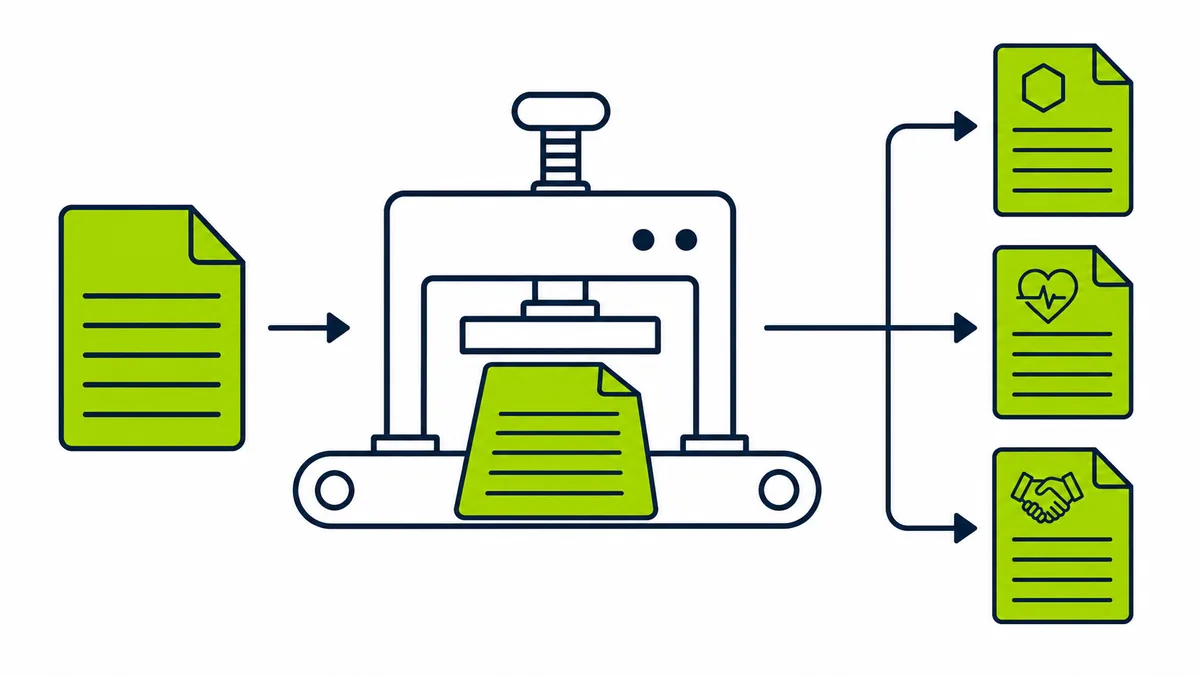
How do I stop rewriting the same partner enablement content for every new partner?
Stop rewriting partner enablement content. Build one core you reuse. Then adjust only the parts each partner needs.
Your Partner Enablement Program Has No Transferable Core — Only Bespoke Deliverables Built to Expire
Stop blaming your team. The real problem is your plan for partner programs. It is not a hiring gap. It is a flaw in your setup, not your output. When partners cannot find or reuse content, you end up in “content chaos.” You have no shared core. Assets get buried and go stale fast (Bigtincan). A quarter of enablement pros (24.2%) say more than 80% of their content goes unused, per the Sales Enablement Collective x Spekit Impact of Enablement Report. Skip structure, and flaws pile up. That hurts both sales teams and partner teams.
Your platform needs a strong content system. Every new partner should get the same clear, correct product facts. If your team builds new sales assets for each launch, partners get an uneven experience. That makes deals harder to close. Use your partner portal as the hub for partner ties. Stop treating each partner as a separate project. Build one ongoing plan you can reuse and update.
Here are five warning signs that your partner program has no center:
- Scattering content across email chains and shared drives
- Making onboarding based on one-off decks
- Failing to tailor training by partner type or role
- Lacking a PRM platform and relying on ad hoc file sharing
- Allowing content to become outdated without a system to update every partner
Compare Structural Gap vs. Staffing Gap:
| Staffing Gap | Structural Deficiency | |
|---|---|---|
| Fix | Hire more enablement FTEs | Build a transferable program core |
| Outcome | Content treadmill | Reusable, updatable content library |
| Measurement | More staff hours tracked | Partner ramp cycles, content usage rates |
Nearly 90% of partners' top issues tie back to program gaps, per a Deloitte analysis of an ESG channel survey. Central, role-based plans that partners can reuse cut time to first deal a lot. This is a system flaw. It is not a resource gap.
When a New Partner Signs, Someone on Your Team Starts Editing Last Partner's Deck From Scratch
You know the drill. A new partner joins. Your team rushes to copy, paste, and rework last quarter's assets by hand. Key stats, feature pages, and product slides all get revised — never rebuilt from scratch. Your inbox fills with repeat questions and rush edit requests.
Without a good partner platform, onboarding stalls. It gets lost in messy content. Your sales team spends too much time redoing the same assets. This slows the flow of know-how. It creates problems for your channel sales partner. Frequent asks for sales assets eat up your time. Sales reps waste time on rework. They do this instead of finding new leads. Deal steps stay uneven. Your sales platform lacks clear rules. Every onboarding turns into a fire drill. It drains time that should go toward real partner work.
This content redo is not just boring. It hurts your whole partner program. It shows up in your forecasts. Pipeline growth soars when firms tighten their sales motion. Average reported pipeline growth rose from 23.2% to 36.2% — 13 points. Source: SEC's Salary & Landscape Report, a survey of sales enablement broadly. Instead, your reps stay stuck doing grunt work.
Facing this chaos, you see three rising problems:
- Allowing unused content to pile up — 24.2% of enablement pros report more than 80% of their content goes unused Sales Enablement Collective.
- Receiving complaints from partners about scattered onboarding and training GetGuru.
- Losing a clear voice, with each partner hearing a slightly different pitch or story Bigtincan.
Your best reps spend hours editing instead of selling. Nearly 90% of partners' top issues tie back to program gaps, per a Deloitte analysis of an ESG channel survey. 70% of partners say onboarding has too many steps (2112 Group, via Deloitte).
Let the numbers sink in:
| Problem Area | % Impacted | Source URL |
|---|---|---|
| Unused Content | 24.2% report >80% unused | SEC x Spekit report |
| Enablement is Top Challenge | 90% | Deloitte / ESG survey |
| Onboarding Has Too Many Steps | 70% | 2112 Group via Deloitte |
| Pipeline Growth with Structure | +13 pts (23.2%→36.2%) | SEC Salary & Landscape Report |
| Training Gets Forgotten | 80% (in 90 days) | HBR (Cespedes & Lee) |
Every round of edits burns billable hours. It adds up the mess. Scattered edits and last-minute patches show a deep flaw in your partner program. Partners notice the gaps. Your team feels the drag. Your revenue takes the hit.
Partner Enablement Breaks at Scale Because Programs Get Built Per Deal, Not Per Channel
You end up rewriting the same content. Your setup is reactive, not repeat-ready. Each new partner gets new sales assets. Your team stretches thin. Content spreads across emails and drives. 24.2% of program pros report over 80% of their content goes unused. This happens due to a program that is out of sync. Sales Enablement Collective You cannot track use. You cannot keep one clear message.
A channel program should not mean building new sales assets for each partner. A real partner program runs on one shared platform. That platform rests on solid content and training. Trusted tools and help make sure partners get the facts they need. The platform sends tools, training, and updates to every partner on a regular basis. This helps your partners and stops in-house teams from doing the same work again and again. Without a good partner portal or content system, you miss the chance to ease deal steps, send training, and share updates widely.
Every new use case leads to another one-off training asset. Nearly 90% of partners' top issues tie back to program gaps. Per a Deloitte analysis of an ESG channel survey. A real plan never emerges. Instead, each deal demands custom assets. Each deal demands custom steps. This wrecks your onboarding timelines. Set onboarding can cut your partners' time to first deal. Role-based training can also cut your partners' time to first deal. By months Sales Enablement Collective.
You also miss learning across teams. Learners in plain course-based training forget more than 80% of what they were taught within 90 days, per Harvard Business Review. Scattered content stacks pile up. Your team scrambles to update many copies for every release. Central PRM tools cut this drag a lot Magentrix.
Compare a per-deal focus to a channel-built program:
| Per-Deal Model | Channel Infrastructure Model |
|---|---|
| Unique content per partner | Reusable, role-based content |
| Dispersed storage systems | Centralized portal (PRM) |
| Ad hoc training assets | Structured, reinforced training flows |
| No usage analytics | Clear tracking & feedback |
| Slow onboarding | Structured role-based onboarding shortens ramp Magentrix |
If you keep building per deal, you cannot grow. Here is the root cause: you never built your program as a channel setup. You built a string of one-off jobs instead.
What starts as a content problem is really a channel program failure. Signs are clear:
- Spreading content across many systems
- Lacking a role-based training setup
- Using old or mixed-up material by partners
- Repeating work by marketing and sales teams
- Rebuilding constantly for message refreshes
This will surface during review. Gaps in repeat-ready channel work never stay hidden.
Your Channel Revenue Forecast Breaks Down When Partner Enablement Content Has to Be Rebuilt for Every Deal
You cannot forecast channel revenue when your content always needs a rewrite. Pipeline accuracy suffers. 24.2% of program pros say more than 80% of content goes unused, due to a weak setup Sales Enablement Collective. Without reinforcement, learners in plain course-based training forget more than 80% of it within 90 days, per Harvard Business Review. Nearly 90% of partners' top issues tie back to program gaps, per a Deloitte analysis of an ESG channel survey. This chaos shows up on your board's dashboard as missed goals.
A real program uses reusable parts and one clear plan. This plan helps drive ownership in sales and marketing teams. Without a named owner, problems arise. Without a linked partner system, things get worse. Your content and training lack feedback loops. They also miss key data. These are needed to gauge the partner experience. They also help cut ramp time. Data on partner tools and help is scattered. This scattering hurts deal steps. It also slows your sales reps down. Partner-driven channel sales suffers due to the scattering. This makes it hard to close deals at a steady pace.
Rebuilding for every new deal creates noisy data. This data throws off your board's calls. Revenue guesses lose trust when partner time to value stretches. Partner time to value stretches without set onboarding. Set, role-based onboarding cuts partner time to first deal by a real margin. Magentrix Firms that invest well in digital, data-driven sales often see 5 to 10 percent revenue growth. That is a general sales gauge, not a partner-program promise, per McKinsey. Scattered content pulls forecast swings up. It pulls deal speed down.
Failure Patterns Driving Forecast Variance:
- Repeating content rewrite requests
- Splitting tools and content libraries
- Engaging and keeping partners poorly
- Mixing up roles for channel partner work
- Missing data for partner ramp and asset use
Compare Results:
| Approach | Forecast Accuracy | Board Confidence | Ramp Time | Revenue Growth |
|---|---|---|---|---|
| Rewriting For Each Deal | Low | Low | Slow | Flat/declining |
| Structured enablement program | High | High | Months, not a year | +13 pts pipeline (SEC) |
If your content cannot scale, neither can your numbers.
A Partner Enablement Program Built Entirely Per Deal Has No Reusable Content Layer to Fix — It Has to Be Rebuilt
Does your partner program reuse the same slides, playbooks, and onboarding videos for every new partner? Or do you start fresh every time and rebuild everything for each deal? If you spend more time building partner-specific tools than updating shared content, you slow yourself down. Your partner plans lack a reusable base. Without a central hub or ready-to-repeat assets, you stay stuck in a loop of redo work.
Content system failures hit both partner and in-house teams. If you lack a true partner platform, your onboarding stays scattered. It cannot give your partners the same facts and skills. A strong partner platform should be the base. It backs channel partner work at scale. It centers content and training updates. It links sales assets to every new partner. Tools, help, and product facts must be linked. Without these, your partner experience drifts during onboarding.
Try this self-check list:
- Using unique decks or case studies for each partner
- Holding partner trainings with no set agenda
- Storing content in email chains or local drives
- Lacking the power to update messages system-wide in days
- Receiving asks from each new partner for one-off items
If you check most boxes, you face content chaos. Data shows 24.2% of program pros watch over 80% of their content go unused. This happens due to a weak setup. Sales Enablement Collective Nearly 90% of partners' top issues tie back to program gaps. Per a Deloitte analysis of an ESG channel survey. Scattered tools cause friction. They also cause repeat work. Magentrix Training without reinforcement fades fast — learners in plain course-based training forget more than 80% within 90 days. Per Harvard Business Review. Only set onboarding cuts help-desk tickets. Role-based content also cuts ramp time. Sales Enablement Collective
Comparison: Can You Remediate or Must You Rebuild?
| Criteria | Remediate | Rebuild |
|---|---|---|
| Shared Content Library Exists | Yes | No |
| Central Training Portal in Place | Yes | No |
| Systemwide Messaging Update Possible | Yes | No |
| Tailored, Repeatable Onboarding Flows | Yes | No |
| One-off Resources Are Rare | Yes | No |
If you match the right column more than the left, a quick fix will not work. Plans with no repeat-ready content layer must be rebuilt. Otherwise, you only scale your rework. Strong plans need a central base, content libraries, and system-wide updates. Skip that, and content chaos will grow with every deal.
Channel Partner Enablement at Scale Requires Treating Content as Product, Not as Professional Services Output
Your in-house sales playbooks will not work for partners. The model must shift. Treat each new partner as a one-off job, and you stay stuck in content chaos. A quarter of enablement pros (24.2%) report that more than 80% of their content goes unused, per the Sales Enablement Collective x Spekit Impact of Enablement Report. Nearly 90% of partners' top issues tie back to program gaps, per a Deloitte analysis of an ESG channel survey. Ad hoc content means an uneven voice. Ad hoc content causes double work Bigtincan.
Growing your partner program means running a real partner portal. Run that portal like a product, not a service you redo each time.
True channel sales need auto updates, a clear content system, and synced sales assets. Together, these keep your goods and services at the bar partners expect.
A real partner program gives channel partners set content and fresh sales assets. It gives them a trusted system for deal steps. It links your in-house sales team and your partners through one shared setup.
Treating content as a product fixes this at the root. Firms that move to a set model cut partner time to first deal by a lot. Central, role-based plans are the driver Magentrix. Firms that invest well in digital, data-driven sales often see 5 to 10 percent revenue growth — a general sales gauge, per McKinsey.
Treating content as product means these shifts:
- Consolidating into a single, central platform
- Winning clear in-house/external ownership
- Using AI or data to track content use and gaps
- Building content in role-based and local modules
- Replacing one-off onboarding docs with repeat-ready learning paths
Compare: Professional Services vs. Product Approach
| Feature | Professional Services | Product Approach |
|---|---|---|
| Content creation | Bespoke, per partner | Modular, reusable |
| Onboarding workflow | Manual, ad hoc | Automated, role-based |
| Usage tracking | Difficult or delayed | Real-time, centralized |
| Update frequency | As needed, reactive | Scheduled, platform-driven |
| Partner access | Scattered channels | Unified portal (PRM) |
Your current setup probably mixes both. Until you take on a product mindset, growth will keep slipping past you.
Separating Core Partner Enablement Content from Partner-Specific Overlays Is What Makes a Program Scalable
You cannot grow your partner program without a clear setup. Start with this base: split what every partner needs from the add-ons unique to each partner. Nearly 90% of partners' top issues tie back to program gaps, per a Deloitte analysis of an ESG channel survey. If you rebuild from scratch every time, you lose time and a clear voice. A quarter of enablement pros (24.2%) report that more than 80% of their content goes unused because it does not fit Sales Enablement Collective.
Tuning content and training for many partners rests on one shared platform. It should split must-have assets from extra ones. A focus on partner fit and partner ties matters. Use your platform to give partners access to core items first. Then set up more assets for their area, market, or product needs. Firms with this kind of content system put real work into backing partners with a set team. They also lean on a proven sales platform for channel sales.
Start by marking "core" assets, such as:
- Company story
- Core product training
- Legal/compliance rules
- Standard sales plays
- Universal onboarding workflows
These belong in every package, unchanged. Next, set aside content to adapt, such as:
- Providing case studies by trade
- Making local messages
- Building co-branded marketing
- Designing role-based playbooks
- Offering product bundles for partner groups
Set, role-based onboarding and training cut partner time to first deal by a real margin. Magentrix Role-based and custom modules cut one-off asks. Sales Enablement Collective AI-powered add-ons can shape content on the fly to fit each partner's gaps. TSIA
| Core Enablement (Unchanged) | Overlay (Customizable) | |
|---|---|---|
| Use frequency | Every partner | Selected partners |
| Update trigger | Corporate changes | Account plan or region |
| Owner | Enablement team | Partner manager, marketing |
| Storage | Central library | Modular extension |
| Delivery | PRM base package | Dynamic add-on |
Set these groups, and you cut content chaos. Resist blurring the lines, and you win back your growth.
Effective Partner Enablement Programs Document the Sales Motion Once and Parameterize It for Each Partner
A grown-up program lines up your team and tools behind one sales motion you repeat. Write that motion down, and you cut work while you build training and proof of skill that scales. Per Magentrix, big programs use this method to bring training and proof of skill under one roof. Set, role-based onboarding cuts partner time to first deal by a real margin.
Another key part of a good program is building the right assets. This means clear sales playbooks and the tools and help your team needs. These are built just for the in-house sales team and channel partners. Write down the full partner path, plus how sales and marketing work as one. Add sales assets, tech tools training, and help steps. You give your partners the facts and skills they need. Having this know-how helps them close deals faster. This lets your team step back and let it run. To build this steady base, you need one shared platform. The platform tracks numbers, gathers feedback, and improves the partner path.
Partner-first programs use pieces you can mix, where you set the rules while partners pick the market, field, role, and language that fit their needs. Per the Sales Enablement Collective's Salary & Landscape Report — a survey of sales enablement broadly — firms that tighten their sales motion saw average reported pipeline growth rise from 23.2% to 36.2%. More broadly, firms that invest well in digital, data-driven sales often see 5 to 10 percent revenue growth — a general sales gauge, not a partner-program promise, per McKinsey.
Role-based training and proof of skill cut help-desk tickets across your whole partner base. Nearly 90% of partners' top issues tie back to program gaps. Per a Deloitte analysis of an ESG channel survey. Central PRM tools let you share fresh messages with every partner with no need to redo slides. Magentrix
Benefits of Parameterized Sales Motions:
- Writing down a single sales process.
- Mapping a training set to partner roles.
- Providing content templates with partner-set values.
- Improving tracking through a skills program.
- Automating how assets go out.
Without this base you see:
- Watching content go unused — 24.2% of enablement pros report more than 80% goes untouched Sales Enablement Collective.
- Stalling the time to first deal.
- Scattering onboarding GetGuru.
- Making high friction from tool spread Magentrix.
| Enablement Maturity | Ramp Time | % Content Used | Revenue Growth |
|---|---|---|---|
| Fragmented, unparameterized | Slow | Low | Flat |
| Sales-motion parameterized | Materially shorter | High | +5-10% (digital sales benchmark, McKinsey) |
You build a setup you reuse. That lets you gauge each unit against one bar. Then you close the gap, instead of starting over.
A Partner Enablement Program That Scales Treats New Partner Onboarding as Content Configuration, Not Content Creation
A plan that scales makes onboarding a set of parts. You tune ready-made assets. You never start from scratch.
With this model, your end state looks like this:
- Storing core content in your central PRM hub
- Setting up role-based content sets for each partner
- Fitting training to partner skills and markets
- Auto-updating so every partner has the newest assets
- Tracking use and tuning it based on real signals
A strong partner program runs on a partner portal. The portal alone sends out tools training. It gives one source of content and training. It keeps things steady for the sales platform. This holds for all channel sales partners.
Invest in a shared platform with a strong content system. This platform has smart content tools. You give partners a better path. You help sales reps move faster. You back every step of onboarding. That includes the right facts and skills.
Your channel partners are more likely to close deals when your team hands them the sales assets, tools, and help they need, all tied to your goods and services.
This move ends content chaos. Content chaos leads 24.2% of enablement pros to see over 80% of their assets go unused. This is per Sales Enablement Collective. Build a set, role-based plan, and you ramp new partners much faster. Magentrix lays out the method. This lifts your whole sales motion.
Partners want a smooth start. 70% of partners say onboarding has too many steps. Source: 2112 Group, via Deloitte. Scattered content means an uneven voice. You cut help-desk calls when you tune your plan to fit. Per Sales Enablement Collective, a plan that fits helps. Source: Sales Enablement Collective. A 5 to 10 percent revenue lift is on the table. That is a general digital sales gauge, not a partner-program promise. Firms that invest well in digital, data-driven sales see it. Per McKinsey.
Compare your current state:
| Current State | Fixed End State |
|---|---|
| Ad hoc, duplicative content updates | Single source, configurable assets |
| Manual, one-off onboarding | Structured, workflow-driven ramp |
| Minimal usage tracking | Real-time content analytics |
| One-size-fits-all training | Automated role and region targeting |
Checklist:
- Unifying content with a PRM
- Tagging assets for partner role, market, and skill
- Making onboarding paths with ready-made, editable templates
- Watching use and results to guide fixes
In the First 30 Days, Audit Every Partner Enablement Asset You Own for Reuse Potential
Start with a triage, not a rewrite. Give yourself 30 days to check every asset for real reuse value. Firms that unify training and content in a PRM cut repeat work and drag. Magentrix says this: Magentrix.
Run this check through your content system. Flag core content, product know-how modules, and sales assets that serve many channel partners. Also flag tools and help. Bring in-house teams to speed up review of partner portal assets and sales platform content. The goal is to build a real program with top-tier, repeat-ready assets, not last-minute redo work for every channel sales partner. Line up the output with your goods and services. Use your partner platform to log and track what stays and what gets retired.
Nearly 90% of partners' top issues tie back to program gaps, per a Deloitte analysis of an ESG channel survey. A quarter of enablement pros (24.2%) report that more than 80% of their content goes unused, per the Sales Enablement Collective x Spekit Impact of Enablement Report.
Average reported pipeline growth rose from 23.2% to 36.2% — 13 points — after firms tightened their sales motion, per SEC's Salary & Landscape Report, which covers sales enablement broadly. Firms that invest well in digital, data-driven sales often see 5 to 10 percent revenue growth, a general bar, per McKinsey.
Make three lists:
- Core evergreen content assets.
- Custom, one-off assets built for single deals.
- Content gaps that block partner wins.
Audit for:
- Providing sharp training for clear partner roles
- Offering ready-to-co-brand assets
- Supplying local or template-ready docs
- Tracking use rates in existing tools
Now, compare tool options for triaging and putting assets to work:
| Tool | Unique Value | Friction Points |
|---|---|---|
| Shared drives | Low cost | Scattered, untrackable |
| Standalone LMS | Role-based training | Content silos |
| PRM platform | Unified, trackable, scalable | Upfront setup effort |
Finish with one action: pick three winners from your evergreen list, move them to a central hub, and archive or flag the rest. Push reuse and clear rules, and you stop redoing content. Start from day one. For a plan built for your book of business: Contact Cortado Group.
Frequently Asked Questions
Q: Why do I have to keep rewriting partner enablement content for every new partner? You rewrite content because your plan for partner programs is flawed in its setup, not because of staffing gaps. Without a core you can reuse and a central library, assets get scattered. They quickly go stale, and partners find them hard to spot or reuse. This means you keep making the same content again and again.
Q: What are the warning signs that my partner program lacks a reusable base? Common signs include content spread across email chains and drives, onboarding that leans on one-off decks, and no tailoring by partner type or role. Add a missing central PRM platform and no system to update content for partners, and your program is flawed. It aims at single deals, not growth across the channel.
Q: How does scattered partner enablement hurt my business results? Scattered partner work leaves content unused — a quarter of enablement pros report more than 80% of theirs goes untouched. Partners get an uneven start that feels slow and messy. This chaos drags down revenue growth, stretches partner ramp time, and throws off your pipeline and revenue forecasts.
Core content covers assets every partner needs, such as your company story, core product training, legal rules, and standard onboarding steps sent unchanged. Overlay content is different — it holds custom items like local messages, co-branded marketing, and segment-specific playbooks, each set for a given partner's needs.
To make partner onboarding scale better and cut repeat work, treat the job as content setup, not content creation. Store core assets in a central PRM hub and tag items by partner role and region so they are easy to find. Auto-run onboarding paths, and partners always get the freshest, most fitting assets — while you cut partner time to first deal by a real margin.
Q: What first steps should I take to fix partner enablement content chaos? Check every asset in the first 30 days and rate its worth for reuse. Sort your assets as evergreen, one-off, or gap-fillers. Bring the best ones into one shared platform, and push clear rules and reuse. This cuts repeat work, makes onboarding smoother for partners, and backs steadier revenue results.
You know partner enablement's pain points. Now fix them for good. Build reusable content and auto-steps into your playbook. Cortado Group's team works with PE portfolio firms that need fast, proven GTM steps. Book a call, and let's turn partner onboarding into a repeat-ready asset that scales as you grow.
See how Channel Partner Enablement OS turns this into a guided workflow your reps actually use.
Sign in to your workspace →See where your own channel program stands. Take our channel assessment: 13 questions, four scores (Foundational, Enablement, Revenue Ops & Attribution, Management), one read on where the leak actually is.
Take our channel assessment →