How do I actually measure ROI on AI tools across our channel partner program?
You track ROI by watching the rise in partner sourced pipeline. Use attribution tagging, cohort analysis, or cost displacement to do it. Then link AI use to revenue, quarter over quarter. If a bad deal could cost your job, you need to defend that chain under LP scrutiny. Login counts and training completion rates will not hold up.
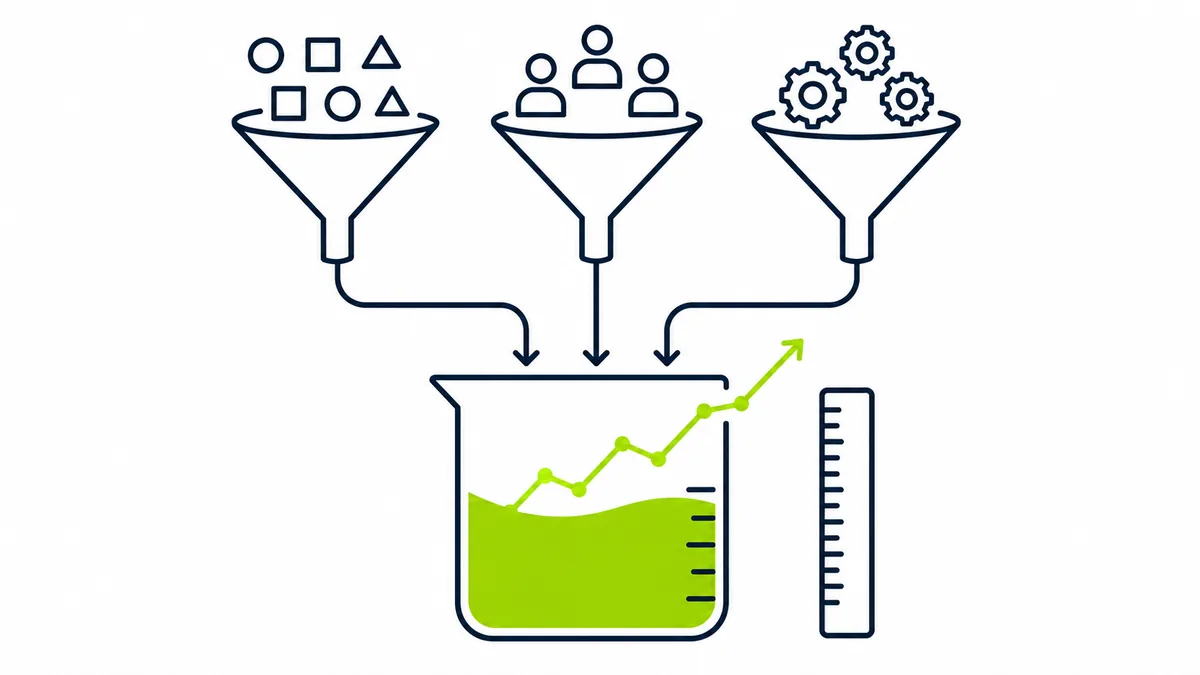
At a portfolio or HoldCo level, you have three real options:
- Attribution tagging tied to partner sourced deals
- Partner cohort analysis that picks out AI exposed groups
- Cost displacement that proves savings against outsourced or manual work
Each fits a different channel setup. Choose based on CRM hygiene, how mature your partners are, and who owns what. Then pull a clean 90 day deal sample. Tag AI touched deals before you build any model.
Partner-Sourced Pipeline Change, Not Tool Adoption, Is the Only ROI Unit That Survives LP Due Diligence
Your LPs do not care how many partners logged into an AI tool. They care whether partner sourced pipeline moved, and whether revenue moved with it. You need to defend that movement. It should tie to revenue growth and, later, net profit. If a bad deal costs your job, AI usage numbers will not save you in an IC meeting.
You sit between vendors, portfolio leaders, and deal partners. Each group pushes a different success story. Tool vendors point to signups. Operators point to activity. Deal partners need one number that survives LP due diligence: the rise in partner sourced pipeline, quarter over quarter, backed by enough data to explain the change.
This matches a broader AI trend. AI leaders who scale across core workflows deliver 10 to 25 percent EBITDA gains, according to Bain. LPs read that benchmark. They expect your channel program to point at a similar ROI story, not badges and webinars. They also compare how well you track ROI against your peers. They already treat ROI as a core skill.
The gap starts early. Only 41 percent of vendors have defined success for their partner program, or which partner actions drive it, according to TSIA. Without that clear goal, you fall back on tool centric reports. You lose sight of key KPIs like cost per lead, win rate, and sourced pipeline.
Your measurement north star should read: “AI exposed partners increased sourced pipeline by X percent, at Y cost per lead, within Z months, relative to non AI peers.” Every other metric, including early signal KPIs, serves that one statement.
Most Portfolio Companies Have AI Tool Deployment Data and No Causal Link to Partner Revenue
You likely have adoption dashboards. They show partner invites, logins, and training completion rates. None of that proves AI changed partner revenue or made leads better. A PE deal partner cannot defend the GTM number with charts like these. They do not show whether that activity turned into leads the board will trust.
This matches a broader problem. Only 54 percent of marketers trust their own ROI numbers across digital channels, according to Nielsen's Annual Marketing Report, a survey of 1,524 marketing pros. 62 percent have to stitch together many tools just to see across their channels at all. Channel AI makes this harder still, since marketing and sales teams often read the same data in different ways.
Two gaps break the chain:
- You do not link AI activity to specific partner deals.
- You do not compare those deals against a real baseline.
Zinnov notes that revenue attribution across partners gets harder as multi partner, AI led work spreads Zinnov. Your LPs know this. They will push harder on your story and on how you track ROI in SaaS portfolios. Partner engagement is a core growth lever.
Say you show that partners who used an AI guided playbook closed more deals. Without clear tagging and a control group, the LP will ask whether those partners already did better on their own. They will also ask whether KPIs like win rate or cycle time really moved for the AI exposed group.
MIT Sloan says AI ROI needs several approaches, not one method MIT Sloan. Your problem today is not a missing model. You lack the basic data setup needed to claim cause and effect, to back up your case, and to show which AI moves actually worked.
Pull 90 Days of Partner Deal Data and Tag AI-Touched Opportunities Before Choosing a Measurement Method
You cannot build measurement after the fact once the board asks “show me the impact.” Your first move should be plain, before you even pick a way to measure AI ROI. Pull 90 days of partner deal data. Tag AI touched deals. This gives future pipeline work a solid base.
Start with one report from your CRM or PRM:
- All partner sourced and partner influenced deals
- All deals created in the last 90 days
- All deals with owner, partner, stage history, and campaign fields
Then create one simple yes/no tag: “AI touched: yes or no.” Define “AI touched” in a narrow way. Examples include AI written outbound, AI built proposals, AI scoring, or an AI co-selling helper. Over time, this setup can support more advanced lead scoring, if you need it later. It will not force you to redo your data or system. It just keeps that door open.
This step matters. Only about a third of marketers say they trust their ability to bring customer data together across tools, per MarTech/chiefmartec research. Your channel stack likely sits in silos already. If you do not tag now, you will not be able to rebuild the data later. Any ROI report you attempt will look like a guess.
As you tag, you expose three facts:
- Missing partner attribution on deals
- Uneven campaign or activity logging
- AI usage that never touches recorded deals
Those gaps point to where to fix things first. They also give you a solid baseline. You will know how much partner pipeline AI touched, and its average cost per lead for that snapshot window. That baseline lets you dig deeper later, without redoing the raw data.
Attribution Tagging, Partner Cohort Analysis, and Cost Displacement Each Produce a Different Channel AI ROI Number
You can track channel AI ROI in three different ways. Each uses different data and answers a different board question. You probably need at least two methods. MIT Sloan notes that serious AI programs lean on more than one way to measure MIT Sloan.
Here is the landscape.
| Method | What it measures | Data required | You can claim |
|---|---|---|---|
| Attribution tagging | Incremental revenue from AI touched deals | Clean tagging at opp and campaign level | “AI drove X in sourced pipeline” |
| Partner cohort | Performance delta between AI and non AI partners | Partner segmentation and time series data | “AI partners outperformed by X percent” |
| Cost displacement | Savings versus previous cost to achieve same work | Pre AI cost baseline and AI invoices | “AI saved X at same or higher output” |
Attribution tagging looks like multi touch attribution in performance marketing, such as first touch or time decay Improvado. You assign partial or full credit for partner sourced revenue to AI tagged work. That setup fits cleanly into "pipeline attribution" stories for IC or board meetings.
Partner cohort analysis compares AI enabled partners to a matched control group. You track KPIs like sourced pipeline, win rate, and sales cycle length. These help you see whether AI made partner engagement better, in both quality and amount.
Cost displacement compares your AI spend to past outsourcing or manual effort. For a sense of the scale on offer, companies that reach AI-driven "Dynamic Enablement" maturity cut learning and development costs by 40 to 50 percent versus static training models, per Josh Bersin. This method tests whether savings on that scale actually show up in your program, and whether the effect on ROI is real.
Your Channel Program's CRM Hygiene Determines Which of These Three Methods You Can Actually Execute
Your choice does not start with theory. It starts with how good your CRM and PRM data is. If you overreach, your ROI story falls apart. A few sharp questions will expose it. Any dashboard you build for LPs will fail to hold up.
Use this checklist to check what you can actually run:
- Attribution tagging
- Consistent partner-sourced and partner-influenced fields
- Reliable campaign or initiative tags on every deal
-
Activity logs that tie AI work to records
-
Partner cohort analysis
- Clear partner tiers or segments in your system
- At least four quarters of partner performance history
-
Stable sales and marketing comp plans over that period
-
Cost displacement
- Documented pre AI costs for the same output
- Invoices or time tracking for replaced vendors or roles
- Usage data or licenses tied to specific teams or partners
If your CRM hygiene looks shaky, do not lead with complex attribution. Metaflow warns about "attribution theater": false precision without real proof Metaflow. LPs will spot it fast, especially in portfolios where ROI in SaaS is already a board level topic.
Remember that only 41 percent of vendors have defined success, or which partner actions drive it, according to TSIA. If you sit in the other 59 percent, your first job is definition and cleanup, not fancy modeling. Getting the basics right matters just as much for sales, customer service, and partner teams. All of them lean on the same shared data.
Platform Companies Need Attribution Tagging; Bolt-On Acquisitions Should Start With Cost Displacement
Different portfolio profiles need different main methods. Match the wrong one, and your AI story starts to look like AI washing to LPs. Berkeley's CMR warns against buzzword metrics and calls for long term KPIs that show real ROI Berkeley's CMR. These KPIs must tie back to partner sourced pipeline, not just activity.
Platform companies usually have:
- Centralized CRM
- Standard partner processes
- Shared AI enablement across regions
For these, attribution tagging should sit at the core. You can define clear partner motions, track which AI tools support each step, and attach revenue credit through multi touch models or lift tests. You can dig into this further across regions, without changing your underlying story.
Bolt on acquisitions and earlier stage assets look different:
- Fragmented systems
- Inconsistent partner definitions
- Local AI experiments without unified tracking
For these, start with cost displacement. You can still show real ROI by proving AI cut outsourced campaign work or manual channel work. Set a payback window up front and report against it — an explicit, pre-agreed time horizon is what makes a cost displacement number hold up.
As you bring systems together, you can layer on partner cohort analysis. That step moves your story from “we saved” to “we grew partners faster.” Over time, you can show how AI backed lead generation turned into real leads and revenue growth.
In every case, tie generative and agentic AI measures to their value driver, as Deloitte advises. This holds whether you focus on sales execution, marketing teams, or customer service work.
Deal Velocity and Cost Per Lead Move Before Partner Revenue Does — Watch These in the First 60 Days
You will not see solid partner revenue shifts in the first 60 days. You will see movement in lead flow, efficiency, and deal speed instead. Those early signals tell you whether your AI ROI setup works, or needs a reset.
Track three early signals:
- Deal velocity
- Days from partner registration to close
- Stage to stage conversion rates
- Cost per lead
- AI sourced or AI supported leads
- Compared with pre AI campaigns
- Execution metrics
- Number of AI generated plays launched per partner
- Response and meeting rates on AI generated outreach
Barely half of B2B marketers feel sure about campaign ROI numbers. Allied Market Research projects the global sales intelligence market will hit $7.35 billion by 2030 (10.6% CAGR). That gap shows up first in these day to day metrics, then in how well teams turn them into KPIs, and later in full ROI reports.
Metaflow calls out execution metrics and execution speed as two parts of a solid measurement system Metaflow. If you cannot see AI speeding up partner campaigns, or cutting cost per lead early, your later revenue story will be hard to sell. These metrics also point to what to fix next when you review results with partners.
Use these signals to spot where to improve:
- Partner groups with flat cycle times despite AI use
- Campaigns with worse cost per lead than manual baselines
- Training completion rates that do not track with real output
Adjust enablement, partner choice, or AI setup before quarter end. Dig into detailed reports across partners to see where engagement runs strongest.
Waiting Until Q2 to Establish an AI ROI Baseline Leaves You Defending a Number You Cannot Reconstruct
If you wait until Q2 to build your AI ROI story, you will end up defending a number you cannot trace back. You will guess which partner deals AI touched. You will backfill baselines. And you will face a tough LP — one who knows that barely half of marketers trust their own ROI numbers across digital channels, per Nielsen.
You have a short window. Your investors will expect visible traction from a pilot within its first few quarters, well before full payback. Measurement work must start now, especially if you want to tie KPI gains to long term net profit goals.
Your immediate 30 day actions:
- Pull and tag 90 days of partner deals for AI touch
- Pick a main method, tagging, cohort, or cost displacement
- Define two or three key metrics that tie to partner sourced pipeline
- Align sales and marketing leaders on one shared AI attribution model
By the end of next quarter, you should show:
- A clear AI exposed versus non AI partner comparison
- Documented changes in deal velocity and cost per lead
- A directional return on investment estimate that fits your chosen method
These steps also make it far easier to tie how ROI in SaaS portfolios links to channel moves, without rebuilding datasets every quarter.
Frequently Asked Questions
Q: What is the only AI ROI metric that actually matters to LPs for your channel partner program? The rise in partner sourced pipeline, quarter over quarter. Every other metric — adoption, activity, efficiency — backs up that one number. None of them can replace it.
Q: Where should you start if you have already deployed AI tools to partners but cannot prove revenue impact? Start by pulling 90 days of partner deal data from your CRM or PRM. Tag which deals were AI touched. Use a simple yes/no tag that marks deals where AI directly helped with outbound, proposals, scoring, or co‑selling. This step exposes gaps in attribution and logging. It gives you a solid baseline for AI touched pipeline and cost per lead.
Q: How do the three AI roi measurement methods differ? They differ in the claim each one backs. Attribution tagging backs "AI drove X in sourced pipeline." Cohort analysis backs "AI exposed partners beat peers by X percent." Cost displacement backs "AI delivered the same output for X less." Pick based on which claim your board actually needs — and which your data can carry.
Q: How does your CRM and PRM hygiene affect which AI ROI method you can actually use? Your data quality decides whether you can run attribution tagging, cohort analysis, or cost displacement and have it hold up. If you lack steady partner sourced fields, campaign tags, and activity logs, complex attribution will fall apart under basic LP questions. In that case, focus first on definition, cleanup, and simpler methods like cost displacement.
Q: What leading indicators should you watch in the first 60 days before partner revenue moves? Track deal velocity, cost per lead, and execution metrics. Measure how fast partner deals move from registration to close. Compare AI supported leads to pre AI campaigns on cost. Track how many AI generated plays and outreach partners run. If AI does not speed up work or cut cost per lead early, your later revenue story will be hard to defend.
Q: Why is waiting until later in the year to define AI ROI such a risk with LPs? Because baselines cannot be rebuilt after the fact — a number backfilled in Q2 from untagged deals is a guess, and LPs treat it as one. Tagging deals and agreeing on an attribution model now costs days; defending a number you cannot rebuild later can cost the whole story.
If you want help sorting through your options, or help building something LP proof, Cortado Group can help. It can de-risk the work and put a number on it.
If these problems sound familiar, it is time to act. You need a partner who can turn strategy into execution and real results. Reach out to Cortado to size up your gaps and build a clear roadmap. Work with Cortado to fix this.
See how Channel Partner Enablement OS turns this into a guided workflow your reps actually use.
Sign in to your workspace →See where your own channel program stands. Take our channel assessment: 13 questions, four scores (Foundational, Enablement, Revenue Ops & Attribution, Management), one read on where the leak actually is.
Take our channel assessment →